
Sinus and nasal surgery · Provo
Expert care for clearer breathing.
Medical and surgical options for chronic sinus infections, a blocked nose and nasal allergies, with a treatment plan built around your goals.
Conditions we treat
What is getting in the way of your breathing?
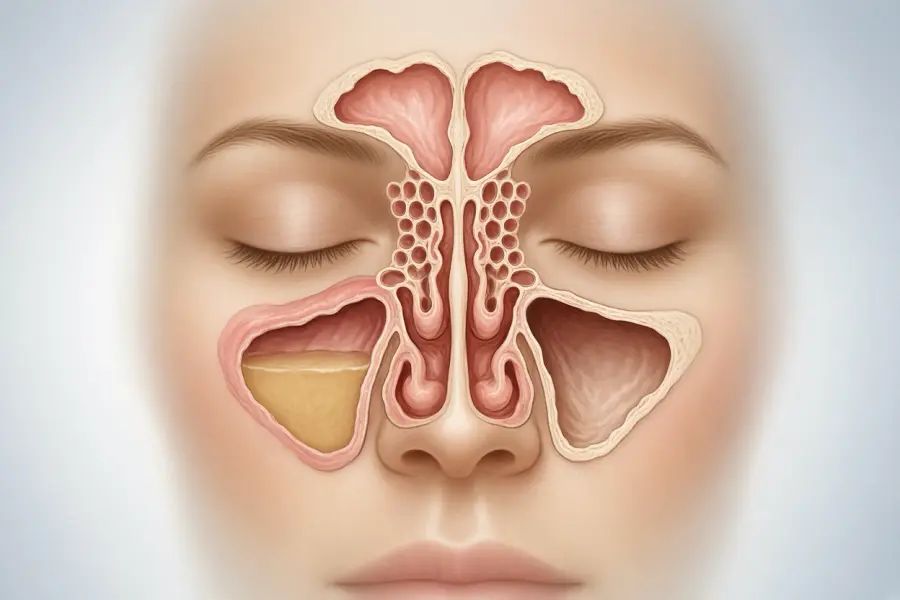
Illustrations made for this site. Dr. Anderson to review for accuracy.
Why sinus care
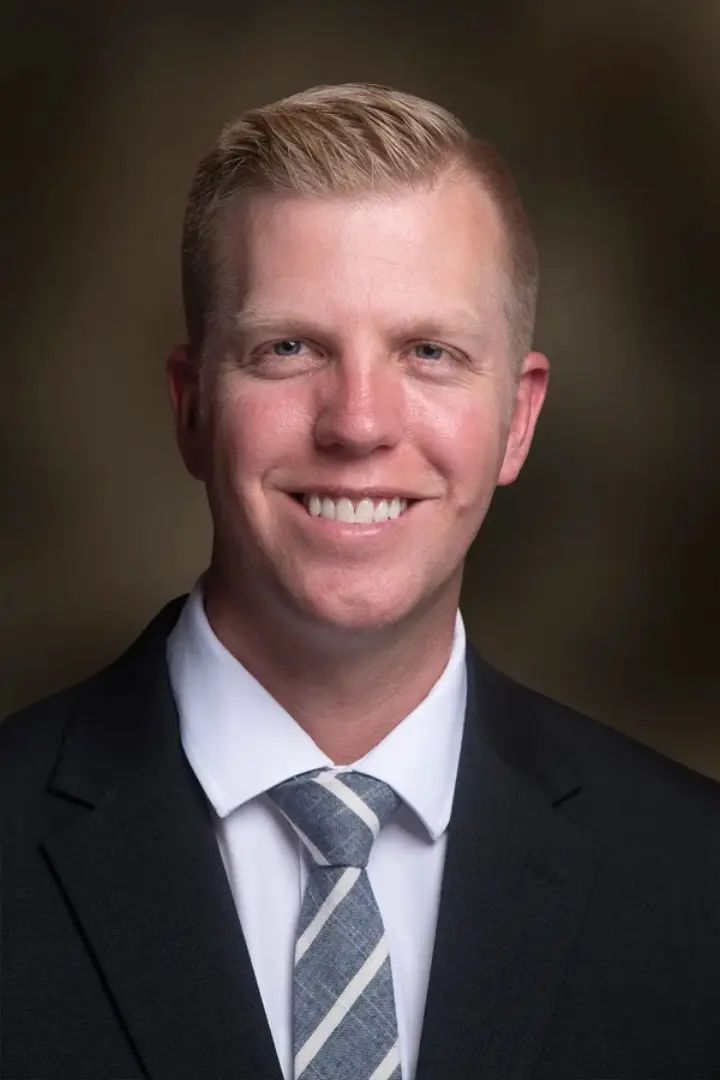
As someone who struggled with chronic congestion and nasal breathing my whole life, I truly understand how frustrating sinus issues can be. In my fourth year of medical school I was diagnosed with a deviated septum and nasal polyps. After trying every medical therapy without success, I had sinonasal surgery. It completely changed my life. I want to help you breathe easier and feel the same relief I did.Dr. Zachary Anderson
Featured procedure
Image-guided endoscopic sinus surgery
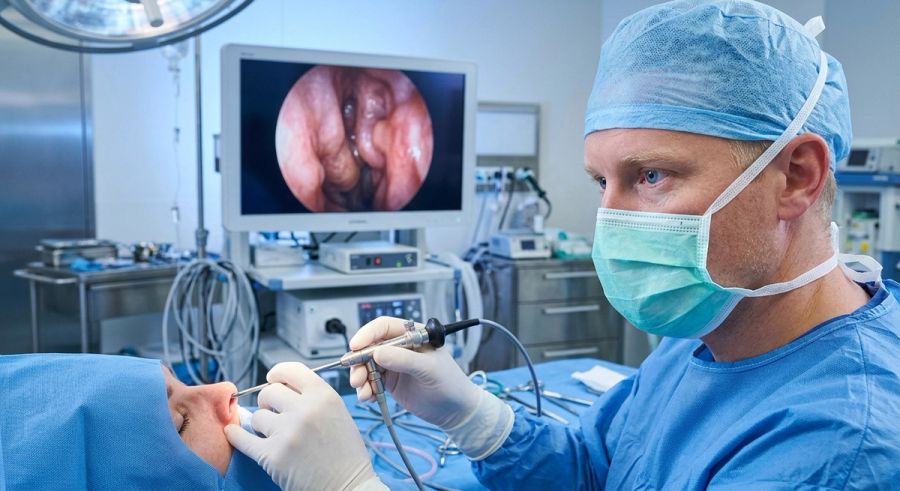
For sinus infections that keep coming back, or one that never clears. CT scans build a 3D map of your sinuses, and every instrument is tracked live against it, so the surgery is precise and avoids the eyes, brain and major blood vessels.
What each treatment involves
Medical treatments
You have come to the right place for all your sinus and nasal needs! We provide comprehensive medical and surgical options and will customize a treatment plan to meet your goals of care.
MedicalMedical therapies
Sprays, rinses, medication and allergy care
Medical therapies
Sprays, rinses, medication and allergy care
Medical therapies include nasal steroids, nasal antihistamines, nasal saline rinses, oral antihistamines, oral antibiotics, culture-directed sinus rinses, biologic therapies and allergy shots.
 Nasal steroid spray
 Nasal antihistamine spray
 Saline sinus rinse
 Oral antihistamines
 Oral antibiotics
 Culture-directed sinus rinse
 Biologic therapy
 Allergy shots
New illustrations made for this site.
Surgical and procedural interventions
Surgical interventions
SurgeryImage-guided endoscopic sinus surgery
For sinus infections that never clear
Image-guided endoscopic sinus surgery
For sinus infections that never clear
Do you get multiple sinus infections a year, or have a sinus infection that never seems to clear? Maybe you just feel chronically congested? If a CT scan shows you have sinusitis, and you have failed medical therapy, you would benefit from image-guided endoscopic sinus surgery.
Image-guided endoscopic sinus surgery is an advanced, minimally invasive procedure that combines a tiny lighted camera (endoscope) with real-time 3D computer navigation to map and operate within the nasal passages.
How it works
- Preoperative mapping: Uses high-resolution CT scans of your sinuses to create a detailed virtual 3D roadmap of your unique anatomy.
- Real-time tracking: Employs electromagnetic tracking to pinpoint the exact, live location of surgical instruments relative to your CT images.
- Enhanced safety: Helps the surgeon navigate tight spaces and safely avoid delicate, high-risk structures like the brain, eyes, optic nerves and major blood vessels.
Key benefits
- No external scars: Performed entirely through the nostrils using specialized micro-instruments.
- Greater precision: Reduces the risk of accidental injury to surrounding critical areas.
- Faster recovery: Typically done as a minimally invasive outpatient procedure with less post-procedure pain.
SurgerySeptoplasty
Straightens a deviated septum
Septoplasty
Straightens a deviated septum
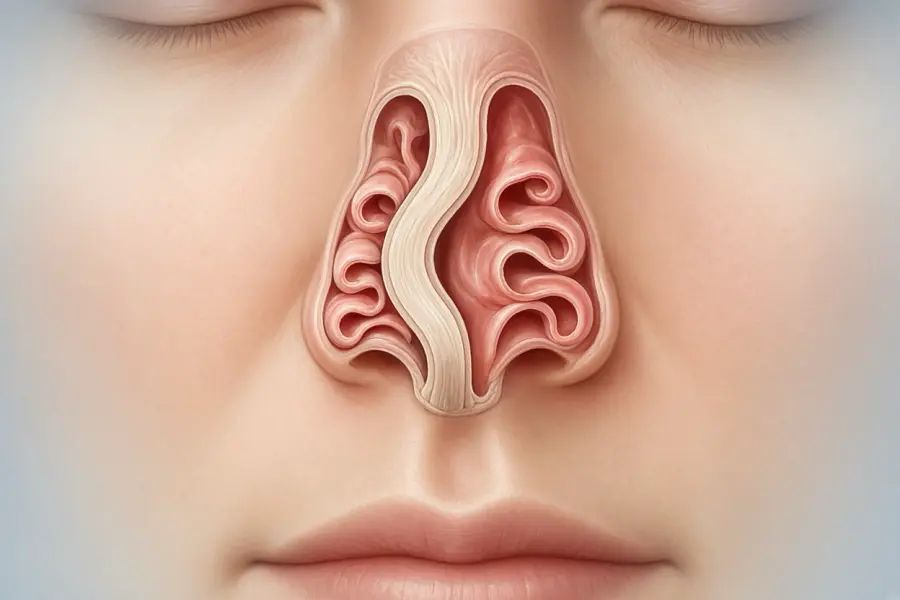
Septoplasty is a corrective surgical procedure performed to straighten a deviated nasal septum, the internal wall of bone and cartilage that divides your nostrils into two separate chambers. When the septum is off-center or crooked, it can drastically block airflow on one or both sides, leading to significant breathing issues.
How the procedure works
- Internal incisions: The surgery is performed as a closed procedure, meaning the surgeon works entirely through the nostrils. There are no external cuts and no visible scarring.
- Reshaping the partition: The surgeon lifts the mucous membrane lining the nasal cavity to access the underlying cartilage and bone, then trims, reshapes, repositions or partially removes the crooked segments before putting the lining back in place.
- Stabilization: The internal incisions are closed with dissolvable stitches. Occasionally, absorbable nasal packing or temporary plastic or silicone splints are placed inside the nose to hold the newly straightened septum securely in place while it heals.
Why it is done
The primary goal of a septoplasty is functional: it improves nasal breathing by clearing the blocked airway. It is generally recommended to resolve:
- Chronic nasal congestion or airway obstruction
- Frequent snoring or sleep disruption (such as sleep apnea) caused by structural blockage
- Recurrent sinus infections that stem from poor nasal drainage
- Persistent, uncontrollable nosebleeds caused by severe septal dryness or structural stress
SurgeryTurbinate reduction
Shrinks swollen tissue blocking airflow
Turbinate reduction
Shrinks swollen tissue blocking airflow
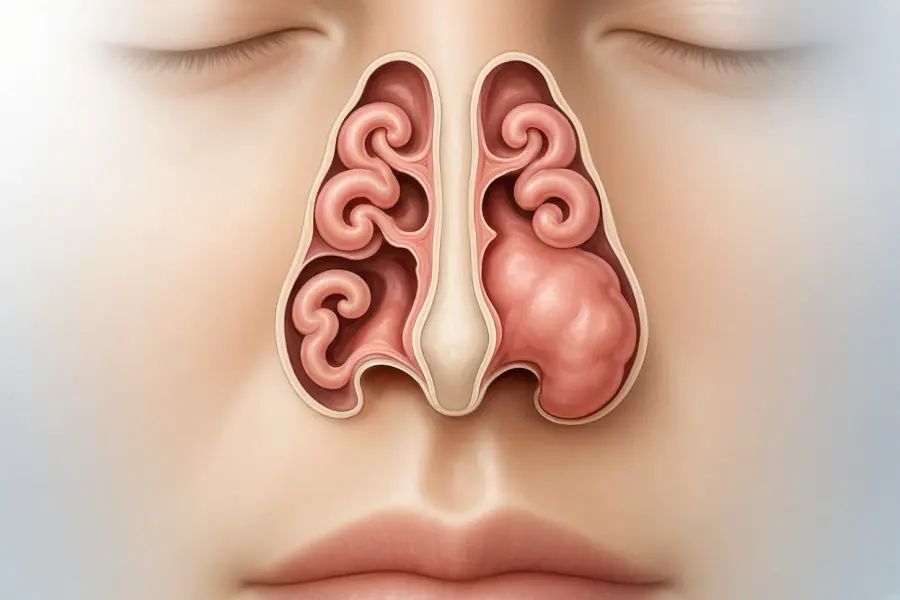
A turbinate reduction surgery is a procedure designed to shrink chronically swollen structures inside your nose to significantly improve nasal airflow.
What are turbinates?
Turbinates are long, narrow passageways of bone lined with a spongy layer of tissue and mucous membrane. They project from the side walls of your nasal cavity. Their primary role is to warm, humidify and filter the air you breathe.
When triggers like severe allergies, chronic infections or structural irritants cause the lowest set of these, the inferior turbinates, to become permanently swollen and enlarged (turbinate hypertrophy), they block the nasal passages. This makes you feel permanently stuffed up and forces you to breathe through your mouth.
The procedure
Turbinate reduction is performed entirely through your nostrils, leaving no external cuts or bruising. There are no external changes to the appearance of your nose.
A minimally invasive submucous resection of the inferior turbinates is usually performed by shaving the inside of the turbinate down to reduce its size, while preserving the mucosa, allowing for quicker healing.
Occasionally, a more aggressive approach is taken through a partial resection of the inferior turbinates, removing some of the mucosa and bone from the turbinate. This often takes a longer healing time, but if necessary, produces a better long-term result.
SurgeryNasal valve stenosis repair
When your nose caves in as you breathe
Nasal valve stenosis repair
When your nose caves in as you breathe
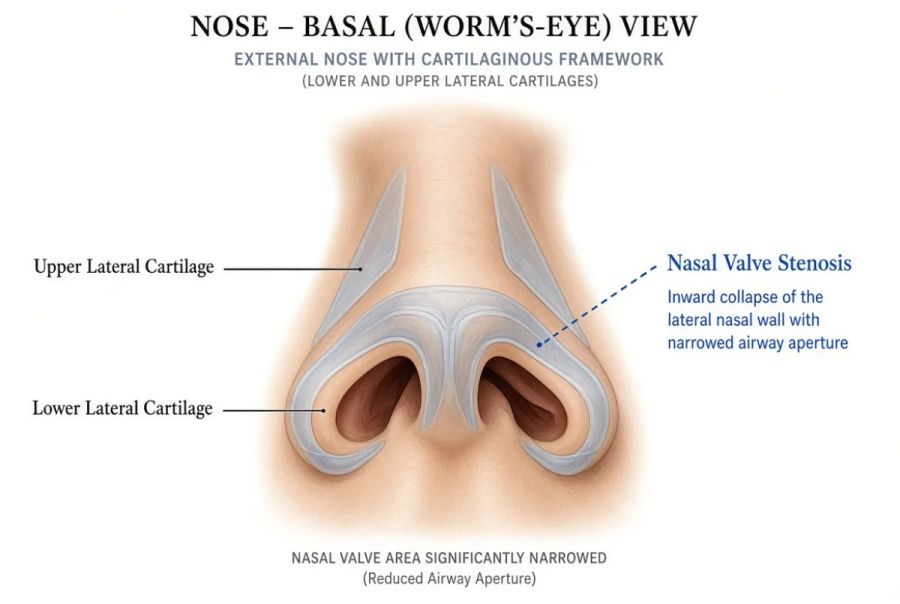
Nasal valve stenosis (often referred to as nasal valve collapse) is the narrowing or structural weakening of the narrowest part of the nasal airway, which creates massive resistance and restricts normal airflow.
The internal nasal valve is a specific junction inside the middle third of your nose. It is formed by three boundaries:
- The central nasal septum
- The lower edge of the upper lateral cartilage (the sidewall cartilage)
- The front tip of the inferior turbinate
If this internal angle narrows by even a few degrees, due to genetics, aging, a deviated septum or trauma, the sidewalls can cave inward every time you inhale, making it feel like you are breathing through a pinched straw.
There are two different ways to repair internal nasal valve collapse, one surgical and one procedural (VivAer, under In-office procedures).
Septal cartilage graft repair
Septal cartilage graft repair of the internal nasal valve is a highly effective, functional surgical procedure designed to structurally widen and prop open this narrow airway using the patient's own tissue.
- Harvesting the septal cartilage: The surgeon typically performs a concurrent septoplasty (straightening of a deviated septum). Instead of discarding the crooked cartilage that is removed to clear the midline, the surgeon cleans, shapes and repurposes it as a structural building material. If a patient has already had a prior septoplasty and lacks septal cartilage, ear cartilage may be used instead.
- Creating "spreader" grafts: The surgeon carves the harvested septal cartilage into thin, small rectangular strips known as spreader grafts (or spacer grafts).
- Placing the grafts: Using either an open or a closed rhinoplasty approach, the strips are inserted between the upper lateral cartilage (the nasal sidewall) and the central nasal septum, like architectural wedges. They push the collapsing sidewall cartilage outward, permanently widening the internal valve, and are anchored with permanent or long-lasting sutures so they do not shift.
By reinforcing the middle third of the nose, the spreader grafts act like internal "Breathe Right" strips. They keep the airway rigid so it no longer collapses inward when you inhale deeply, restoring immediate and dramatic improvements to nasal breathing.
Recovery and aesthetics
- Cosmetic impact: Because this is a functional medical procedure, the primary goal is breathing. In most cases it has minimal impact on how your nose looks, though it can slightly fill out or widen an overly "pinched" or hourglass-shaped nasal ridge.
- Recovery timeline: Recovery typically lasts 7 to 10 days. Patients experience localized swelling, stuffiness and minor bruising. Strenuous exercise, heavy lifting and nose-blowing must be avoided for several weeks to protect the newly anchored grafts.
SurgeryNasal polyps and polypectomy
When you lose your sense of smell
Nasal polyps and polypectomy
When you lose your sense of smell
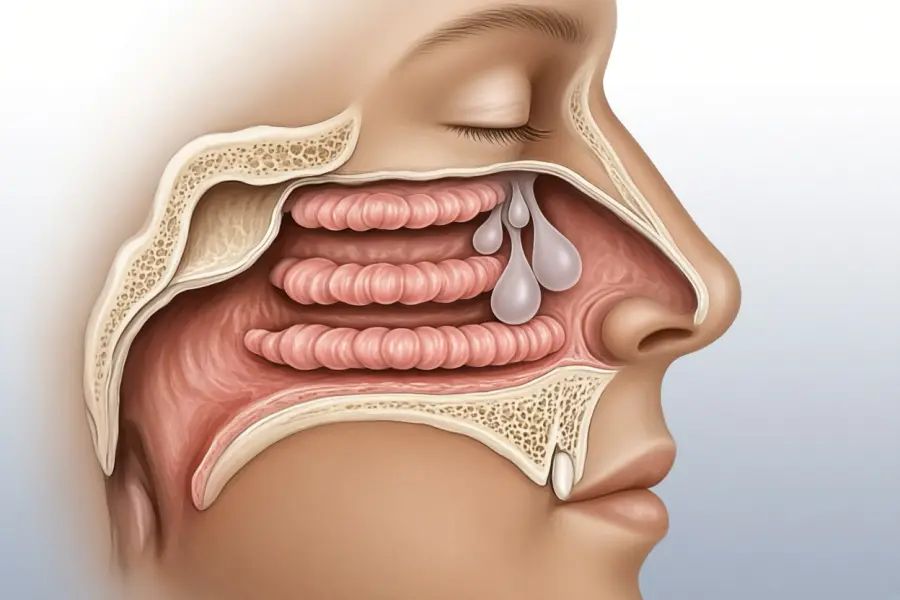
Nasal polyps are soft, painless, noncancerous growths that form on the lining of your nasal passages or sinuses.
What they are and how they form
- Appearance: They look like tiny, hanging teardrops or grapes.
- Cause: They develop from long-term (chronic) inflammation and swelling in the upper respiratory tract, often linked to conditions like asthma, allergies or repeated sinus infections.
- Location: They usually grow in both nasal cavities, near the areas where the sinuses drain into the nose.
Common symptoms
- Persistent stuffiness or a blocked nose
- Reduced or complete loss of smell and taste
- Postnasal drip (mucus running down the throat)
- Facial pressure, headaches or sinus pain
- Snoring or sleep disturbances
Treatment options
- Medications: Corticosteroid nasal sprays or rinses help shrink smaller polyps and reduce swelling. Oral steroids or biologic shots may be used for severe inflammation.
- Surgery: If medicines do not work, a minimally invasive procedure called nasal polypectomy removes large growths.
Surgical and procedural interventions
In-office procedures
In officeBalloon sinuplasty
Opens blocked sinuses without cutting
Balloon sinuplasty
Opens blocked sinuses without cutting
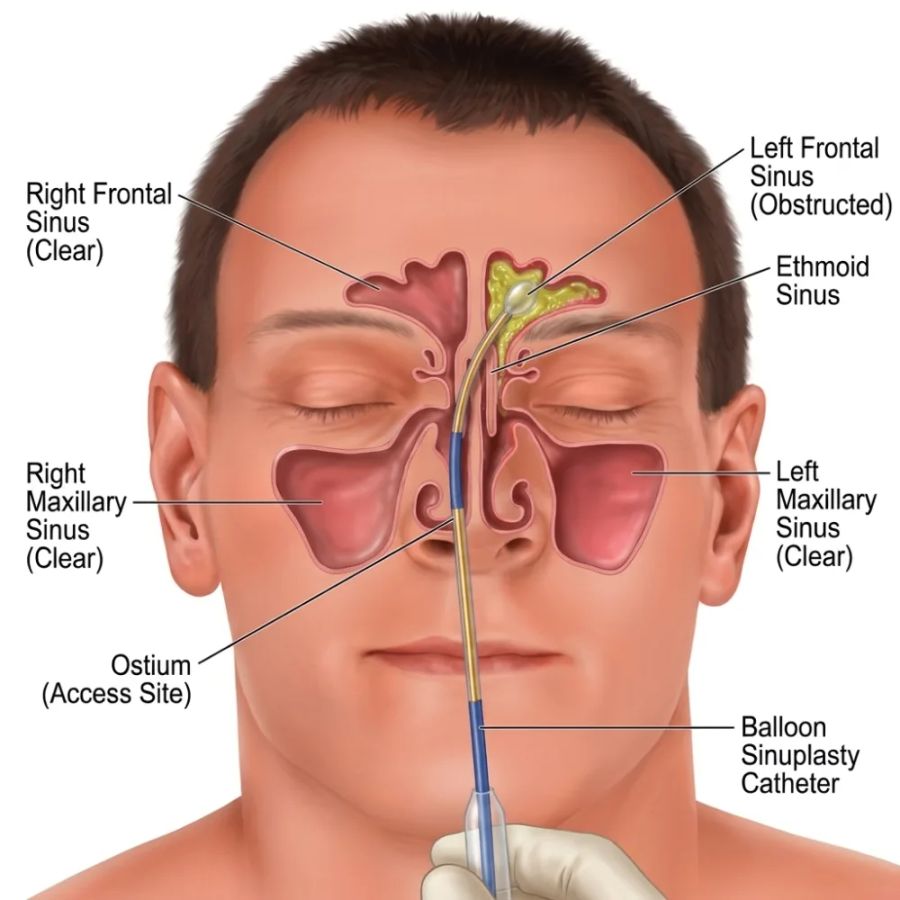
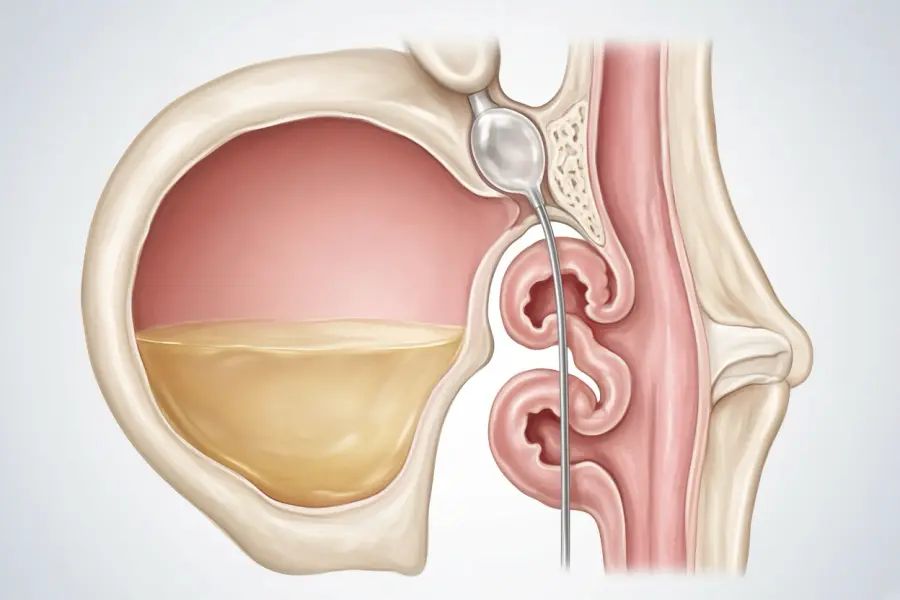
In-office balloon sinuplasty is a minimally invasive, outpatient procedure used to treat chronic sinusitis (sinus inflammation lasting more than 12 weeks) that has not responded well to medication. It is performed in the office while you are awake, under local anesthesia.
Unlike traditional sinus surgery, it requires no cutting or removal of bone and tissue. Instead, it works much like a cardiac angioplasty to gently clear blocked pathways.
How the procedure works
The entire appointment usually takes around 60 to 90 minutes, though the actual dilation takes only about 10 to 15 minutes. The rest of the time is dedicated to making sure your nose is completely numb.
- Numbing: Topical numbing sprays, anesthetic-soaked gauze or small local injections completely numb the nasal cavity.
- Insertion: Using a tiny camera (endoscope) for guidance, a thin, flexible catheter is inserted into the blocked sinus opening. Many systems use a small lighted wire to verify placement.
- Inflation: A small balloon at the tip of the catheter is gently inflated for a few seconds. This permanently restructures and widens the narrow, inflamed sinus walls.
- Flushing and removal: A sterile saline solution may be sprayed into the sinus cavity to flush out trapped mucus, pus or debris. The balloon is then deflated and removed.
In officePosterior nasal nerve ablation
For a constant runny nose or drip
Posterior nasal nerve ablation
For a constant runny nose or drip
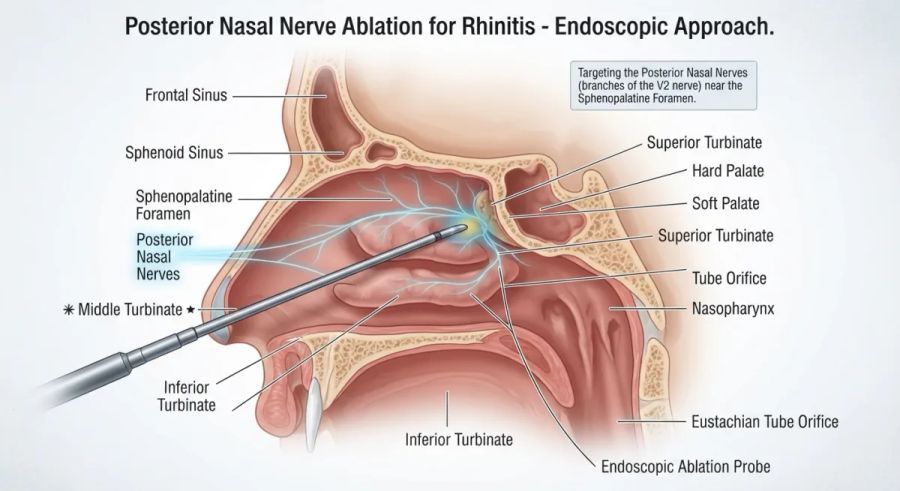
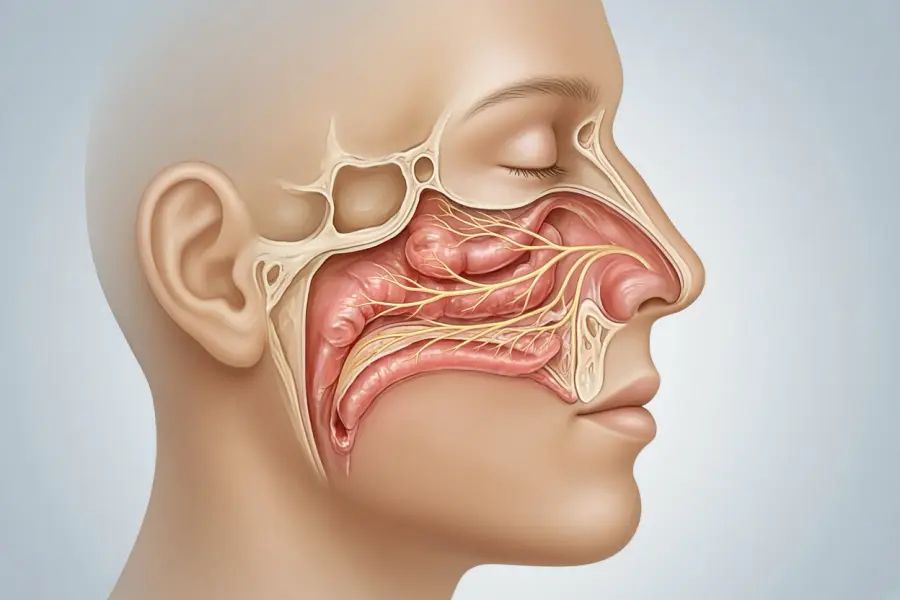
Posterior nasal nerve (PNN) ablation is a minimally invasive, in-office procedure used to treat chronic rhinitis (both allergic and non-allergic) that does not respond to nasal sprays or medications.
How it works
- Target: It deactivates the overactive posterior nasal nerves deep inside the nose that trigger excess mucus, runny nose and congestion.
- Methods: Either controlled cold therapy (cryotherapy, like ClariFix) or temperature-controlled radiofrequency energy (like RhinAer).
- Process: The nose is numbed with topical sprays and local blocks, then a small, specialized wand is inserted into the nasal passage to treat the nerve pathways.
Recovery and results
- Duration: The procedure takes about 30 minutes in the office.
- Downtime: Most people return to normal activities right away, though temporary stuffiness or mild post-nasal drainage can last two to three weeks.
- Success rate: Clinical studies show that roughly 80% of patients experience significant, long-lasting relief from runny noses and congestion.
In officeVivAer nasal valve treatment
Opens the nasal valve without cutting
VivAer nasal valve treatment
Opens the nasal valve without cutting
VivAer is a non-surgical way to treat internal nasal valve collapse in the office, under a local anesthetic, while the patient is comfortably awake. It is an FDA-cleared, non-invasive treatment designed to permanently open the nasal pathways and relieve chronic nasal obstruction without any surgical cutting or incisions.
Unlike traditional open surgeries that require cartilage grafting to fix a collapsed airway, VivAer uses gentle, temperature-controlled radiofrequency (RF) energy to physically reshape the inside of the nose.
How the VivAer procedure works
The entire treatment takes about 15 to 20 minutes and is performed under local anesthesia:
- Numbing: A numbing gel or a small localized injection is applied inside the nose so you feel minimal pain.
- Application: A small hand-held stylus or wand is inserted into your nostril.
- Remodeling: The tip of the wand delivers targeted low-temperature RF energy to the tissue and cartilage. The heat makes the cartilage malleable, allowing gentle pressure to widen and permanently remodel the internal airway.
What it treats
VivAer acts like an internal "Breathe Right" strip by targeting the three primary structural causes of severe nasal airway blockage:
- The lateral wall (nasal valve collapse): It stiffens and flares the weak side cartilage so it stops collapsing inward when you inhale.
- Swollen turbinates: It shrinks chronically enlarged, spongy tissue on the side walls of the nasal cavity.
- Septal swell bodies: It reduces swollen tissue near the top of the nasal partition that narrows the breathing channel.
Testimonials
What patients say
From Dr. Anderson's Google reviews, word for word.
Dr.Anderson performed a sinus surgery on me, that was quite complicated. He put me so at ease and his friendly, professional demeanor was appreciated by myself and my family. He is thorough, professional, kind and gifted in his surgical skills. I will happily refer any one who needs sinus surgery to go see Dr Anderson. He has the knowledge, skill, plus wonderful bedside manner, to give his patients the outcome they had hoped for. Thank you Dr. Zachary Anderson. You are the best!
I got referred to Dr. Anderson for chronic sinus infections. I ended up being a good candidate for surgery, and I'm so glad I did it! Since my surgery, I've had two mild colds that, in the past, would have likely led to severe sinus congestion, if not an infection...but things just drain, and it feels like a miracle! I live in a rural area several hours away, and I always felt that was respected by the office with their efficiency, which was greatly appreciated. This was my first surgery, and I was nervous about it, but Dr. Anderson has earned my trust. I am grateful to have found such a good ENT, and I highly recommend him!
For quite a while I’d been dealing with quite a bit of nasal congestion. I met with Dr. Anderson and he recommended nasal surgery. Since that surgery, I’ve been breathing so much better and haven’t gotten sick near as often. I recommend him without hesitation for anyone that’s dealing with ear, nose, and throat issues. His skill and expertise has improved my quality of life significantly.
Dr Anderson has been great for me. He and his staff changed my life when he treated my nasal polyps. They caused me to have severely limiting asthma. It made it impossible for me to cycle as my fitness hobby. He personally has written letters to my insurance company describing my needs after the company refused a type of medication. After reviewing the letter, the company then approved the requested medication and I have gone back to riding 6 days a week. He recently moved locations and when I found out I immediately changed my location as well. Thanks Dr Anderson!!
I have Dr. Anderson to thank for being able to breathe through my nose. He did my sinus surgery three years ago and for the first time I could feel air actually going in my nose, but I felt bad for the doctor because it turned into a This Old House renovation. He has been such a great doctor friendly, caring and professional. Since then I have trusted him with any other ENT related needs.
Dr.Anderson performed an emergency sinus surgery that was discovered in ER. Could not have asked for a better doctor. Things could have been extremely serious but he took me to surgery right away and things have turned out extremely well. Great care and great beside manner. Highly recommend Dr. Anderson.
Dr Anderson did an amazing job on my septoplasty surgery. He went over in great details what he would be doing and made sure i was prepared. He fought with my insurance company who at first denied coverage. Highly recommend him
Dr. Anderson did a great job with my septum, sinuses, adenoids, and tonsils! Very friendly and informative, as well as accommodating! Would definitely recommend him to anyone looking for an ENT!